
Eyelid Surgery
Upper Eyelid Surgery
This is an eyelid surgery that corrects drooping upper eyelids and ptosis to enhance the appearance of the eyes.
- Time required
- Approximately 30 minutes to 1 hour (varies depending on the method)
- Recovery Period
- Approximately 2–7 days (may vary by individual)
- Anesthesia
- Local or regional anesthesia (details provided during consultation)
Treatment Overview
Upper eyelid surgery is an eye procedure that improves the appearance of the eyes by correcting sagging upper eyelids caused by aging or ptosis, a condition where the muscles that open the eyes have weakened. Rather than focusing on major changes to the size or shape of the eyes, this procedure addresses both skin sagging and functional discomfort to achieve a youthful and comfortable appearance. Depending on the condition of the eyelids, we plan the most appropriate approach, choosing between eyelid contouring and upper eyelid surgery.
Treatment Guide Videos
Recommended Audience
- People with sagging upper eyelid skin due to aging
- People whose eyelids are weak, making their eyes look sleepy
- People who have a habit of raising their eyebrows or forehead to open their eyes
- For those who feel uncomfortable because their eyelids cover their pupils
Treatment Methods and Types
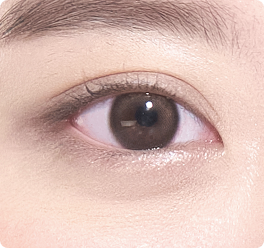 STAGE 01
Upper Eyelid
The eyelid covers the pupil within the normal range.
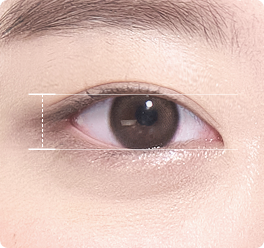 STAGE 02
Mild facial sagging
This is the stage where the eyelids begin to cover the pupils a little more.
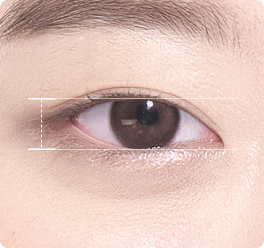 STAGE 03
Moderate sagging
This is the stage where the eyelids cover a significant portion of the iris, causing a feeling of discomfort.
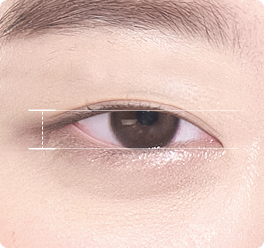 STAGE 04
High-level sewage
This is a stage where the eyelids cover a significant portion of the pupils, making it uncomfortable to open your eyes.
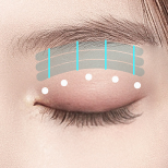
Ptosis Correction
This procedure corrects the muscles (levator palpebrae superioris and Müller’s muscle) to restore the strength needed to open the eyes when the muscles responsible for lifting the eyelids have weakened. The procedure takes about 30 minutes, and we will provide details on the recovery schedule during your consultation.
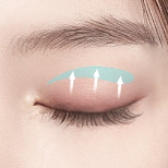
Upper Eyelid Surgery
This procedure involves removing excess upper eyelid skin and repositioning fat tissue to help you open your eyes more easily. It is recommended for individuals whose eyelid opening strength is normal but whose skin has sagged. The procedure takes about 1 hour, and we will provide details regarding suture removal and recovery during your consultation.
Treatment Highlights
 POINT 01
Beauty and Functionality Combined
We plan our approach by considering not only aesthetic aspects but also functional issues related to eye opening.
 POINT 02
1:1 Customized Plan
We develop a personalized plan tailored to the condition of your eyelids based on clinical experience and one-on-one consultations.
 POINT 03
Consultations and Procedures Performed Directly by Board-Certified Specialists
Board-certified plastic surgeons personally handle everything from consultations to surgery.
Notes
Surgical results and the recovery process may vary depending on the condition of the eyelids and individual constitution. Swelling may occur for a certain period after surgery but will subside over time. As there are post-operative procedures, such as suture removal, we will provide details during your consultation. If you have any underlying medical conditions or are taking any medications, a pre-operative consultation is mandatory.
Frequently Asked Questions
Q. What is the difference between eye contour correction and upper eyelid surgery?
Eyelid lift surgery targets the muscles that open the eyes, while upper eyelid surgery addresses sagging skin and fat; the appropriate procedure is determined after a consultation based on the condition of your eyelids.
Q. Will it leave a scar?
The procedure is performed by utilizing the double eyelid crease to conceal incision scars, though the extent of scar concealment varies by individual; we will provide detailed information during your consultation.
Q. Is this procedure only for middle-aged people?
Ptosis can occur at any age, and the need for treatment is determined through a consultation.